Quick Summary
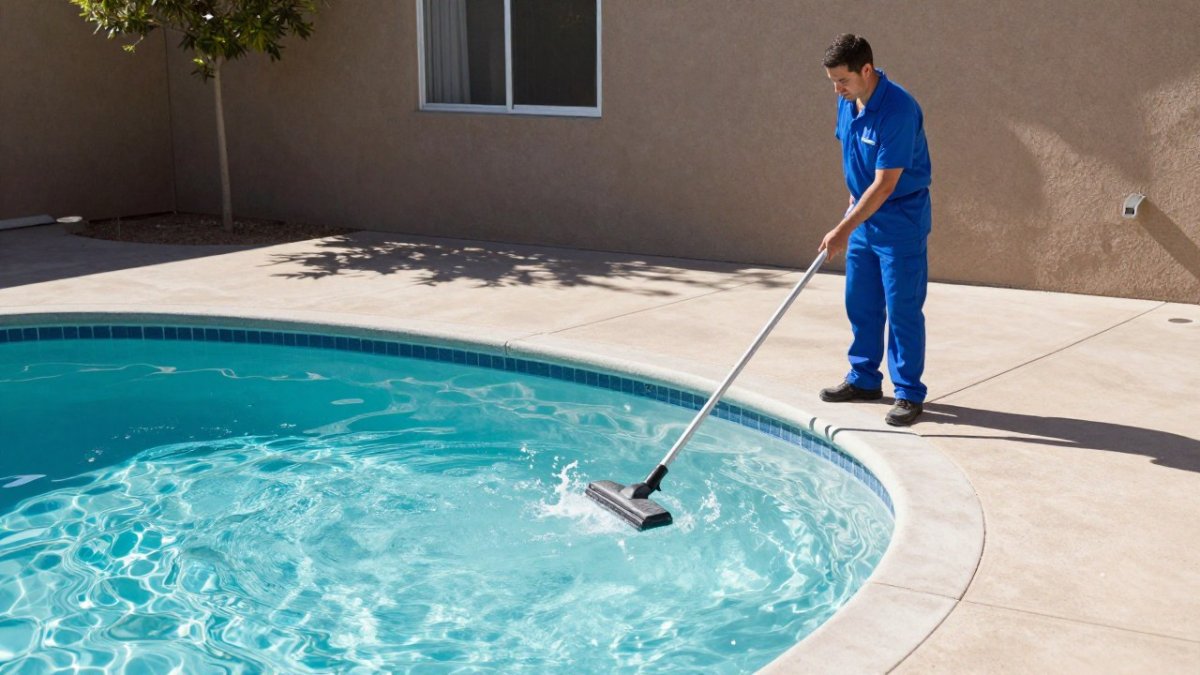
To vacuum a pool, prime the hose underwater, connect it to the skimmer or suction port with no air gaps, and set the filter valve to Waste for heavy debris or Filter for light cleaning. Then move the head slowly in overlapping passes, starting at the shallow end, to vacuum the pool floor.
- Prime the hose underwater until bubbles stop before connecting it to the skimmer.
- Use the Waste setting for heavy sand, silt, or algae and Filter for light debris.
- Turn the pump off before moving a multiport valve handle.
- Overlap each vacuum pass by about one-third of the head's width.
- Refill the pool to the middle of the skimmer opening if it starts drawing air.
Table of Contents
- What You Need Before You Start Vacuuming
- How to Connect Pool Vacuum to Pump
- Setting the Filter Valve Before You Vacuum
- How to Vacuum a Pool with a Sand Filter
- How to Vacuum a Pool Manually Without a Pump
- Troubleshooting Weak Suction and Common Mistakes
- Booking Your Weekly Pool Service With Absolute Blue Pool
- Frequently Asked Questions
What You Need Before You Start Vacuuming
Last Updated: November 17, 2026
Vacuuming a pool by hand clears the sand, leaves, and algae that settle on the floor, walls, and steps. This guide walks you through the process, including the filter settings that trip up most homeowners.
Knowing how to vacuum a pool step by step saves money and keeps water clear between service visits. A clean floor also helps your filter and chemicals work properly.
Equipment checklist for manual pool vacuuming
Gather everything before you start, so debris doesn't settle again while you hunt for a part.
- Telescopic pole, extended to a comfortable length
- Vacuum head, with the brush or plate in good shape
- Vacuum hose, checked for cracks or leaks
Check the hose before you start. A small crack lets air in, and air is the main cause of weak suction later.
Safety precautions before you begin
Pool work is mostly safe, but a few habits prevent injuries and equipment damage.
- Turn off the pump before you connect or disconnect the hose.
- Keep the pool deck dry and clear of tripping hazards.
- Never stand on the pool cover or the edge of a skimmer.
Watch out: never open the pump lid or the filter housing while the pump is running. Pressure inside the filter can cause the lid to blow off and cause injury.
How to Connect Pool Vacuum to Pump
Connecting the vacuum correctly keeps air out of the system, the most common reason suction fails. Most homeowners finish this step in a few minutes.
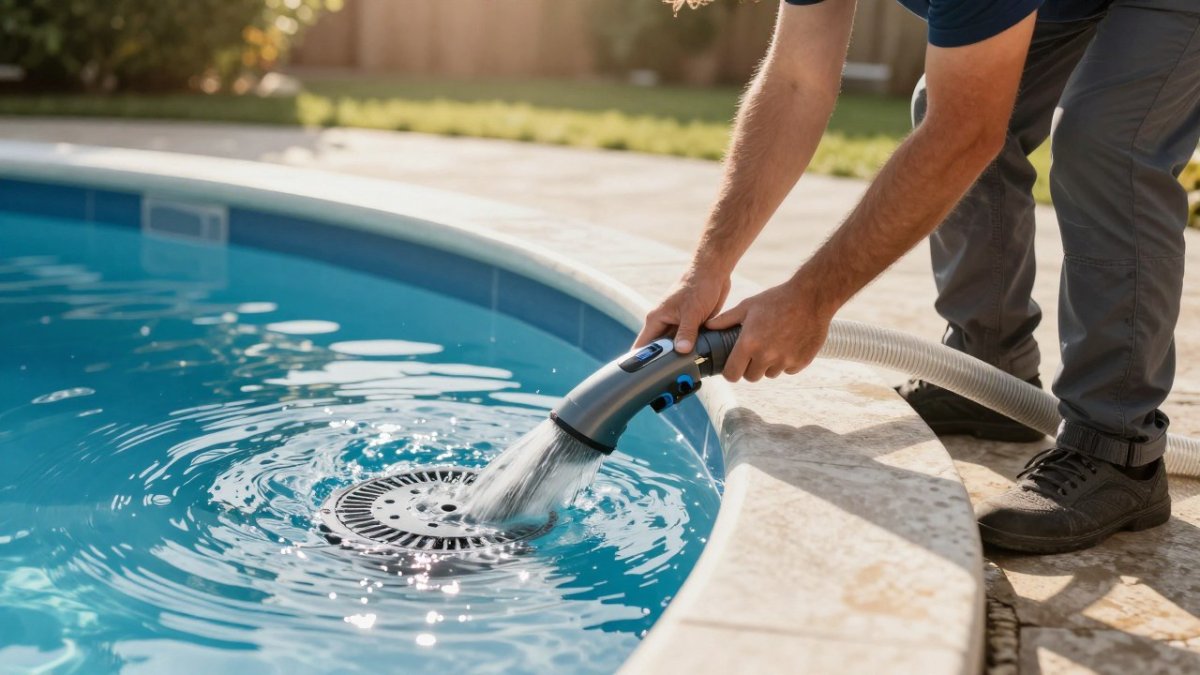
Attaching the vacuum head to the telescopic pole
Snap the vacuum head onto the telescopic pole and push until it clicks. Loose connections can let the head fall off underwater.
Push the hose collar over the head's inlet and twist until it locks. Check that it does not wobble.
Connecting the hose to the skimmer or suction port
Pools use either a skimmer basket or a dedicated suction port on the wall or floor. Use the one closest to the pump.
- Remove the skimmer basket lid and set the basket aside.
- Push the other end of the hose into the skimmer opening, or into the suction port fitting.
- Make sure the connection is snug, with no gaps.
This step causes the most trouble: a loose hose end pulls in air and kills suction within seconds.
Setting the Filter Valve Before You Vacuum
The filter valve decides where the dirty water goes. Set it wrong and debris goes back into the pool, or the pump runs dry and overheats.
Waste setting versus filter setting explained
A waste setting sends water and debris out of the pool through a drain line, bypassing the filter.
A filter setting sends water through the filter as normal.
On a multiport valve, the positions are usually Filter, Waste, Backwash, Rinse, Recirculate, and Closed. Vacuuming uses Filter or Waste.
When vacuuming, the usual approach is:
- Heavy sand, silt, or algae: waste setting
- Light debris or routine cleaning: filter setting
- Cartridge filter with no multiport: filter setting only, then clean the cartridge
Watch out: always turn the pump off before moving a multiport valve handle.
Pool-specific setup for sand, cartridge and DE filters
Each filter type has its own valve steps. Check your filter manual first, because older valves look different and labels can vary.
- Sand filter: Turn the multiport valve to Waste for heavy debris, or Filter for light cleaning. After a waste cycle, refill the pool and check that the water level is back above the skimmer mouth before resuming normal filtration. If the sand itself has worn out, a sand change service can replace it for you.
- Cartridge filter: Most cartridge filters have no multiport valve, so you cannot vacuum to waste. Vacuum on Filter and rinse the cartridge afterward. If the cartridge is old or torn, debris will pass straight through, so inspect the pleats before you start.
- DE filter: Use the same multiport approach as a sand filter. Vacuum light debris on Filter and use Waste for heavy loads, but avoid long Waste runs without checking the water level. If your DE filter needs thorough attention, DE filter cleaning is available as a professional service. After a backwash, recharge the DE according to the filter label; running without a fresh charge lets debris through.
Homeowners with cartridge filters often try to vacuum heavy silt on Filter, then wonder why the cartridge clogs within minutes. If your pressure gauge climbs quickly during vacuuming, stop, switch to Waste if you have a multiport, or clean the cartridge and resume in smaller sections.
Water loss and refill guidance when vacuuming to waste
Vacuuming to waste removes water along with debris, so the pool level drops as you work. If the skimmer starts to draw air, the pump loses prime and suction collapses.
After a waste session, refill the pool and retest the water. Waste water carries stabilizer, salt, and sanitizer with it, so chlorine and pH can drift.
The table below summarises which filter setting to use for each type of debris and filter.
| Situation | Setting to use | Why |
|---|---|---|
| Heavy sand, silt, or algae | Waste | Keeps debris out of the filter and pool |
| Light debris or routine cleaning | Filter | Keeps water loss low and returns filtered water |
| Cartridge filter, no multiport valve | Filter only | Vacuum to waste is not possible |
| Recirculate position | Avoid for vacuuming | Bypasses the filter media |
| Closed position | Never while pump runs | Stops all flow |
How to Vacuum a Pool with a Sand Filter
A sand filter is one of the most common setups in Phoenix-area backyards. The steps below assume a multiport valve with a waste setting. Adjust them if your valve is different.
Submerging and priming the vacuum hose
Priming pushes air out of the hose so suction can pull water through. Skipping this step is the most common cause of a vacuum that seems dead.
- Turn the pump on and let water flow into the skimmer.
- Put the vacuum head in the water near the edge of the pool.
- Slowly lower the hose into the water, letting it fill from the head end.
- Hold the hose end under the water until bubbles stop rising.
- Connect the hose to the skimmer or suction port while it stays submerged.
Watch the hose as it fills. Steady bubbles mean air is still getting in. Check the connections again.
Vacuuming the pool floor, walls and steps in slow, overlapping passes
Move the head slowly. Quick passes pick up less debris and can stir up the dirt you are trying to remove.
- Start at the shallow end and work toward the deep end.
- Overlap each pass by about one-third of the head's width.
- Brush the steps and corners by hand, then vacuum the loosened dirt.
Many homeowners finish the floor and forget the walls. Brush the walls first, then vacuum what falls to the floor.
How to Vacuum a Pool Manually Without a Pump
Some pool owners vacuum by hand without a running pump, using the pool's water level to create suction.
Fill the hose with water, then hold one end lower than the pool surface while the other sits in the vacuum head.
Plan for extra time. Empty the hose into a bucket or drain line when you finish, since the filter is off.
Troubleshooting Weak Suction and Common Mistakes
Weak suction is the most common problem during pool vacuuming, but the cause depends on the symptom. Work through the symptom that matches what you see rather than checking every part at once.
Symptom-to-cause decision guide
- No suction at the vacuum head, pump running quietly: The hose is not primed or the skimmer connection is loose. Re-submerge the hose from the head end until bubbles stop, then reseat the hose end in the skimmer or suction port.
- Suction starts strong, then fades: Air is entering through a crack in the hose, a loose collar, or a gap at the skimmer. Run your hand along the hose while it is submerged; a small crack will pull air and feel cool or tickle.
- Bubbles returning to the pool through the return jets: The pump is drawing air. Check the skimmer water level first, then the pump basket lid O-ring and the hose connections.
Common mistakes that waste time or damage equipment
- Vacuuming too fast, which stirs debris instead of lifting it.
- Forgetting to prime the hose before connecting it to the skimmer.
- Running on Waste without watching the water level, which lets the skimmer draw air and the pump lose prime.
Surface and pool-type considerations
A vinyl liner can puncture if you press a sharp-edged head into a corner or drag it over a seam. Use a soft brush or vinyl-specific plate, and keep the head moving rather than parking it.
Watch out: never open the pump lid or the filter housing while the pump is running. Pressure inside the filter can cause the lid to blow off and cause injury.
Booking Your Weekly Pool Service With Absolute Blue Pool
Manual vacuuming takes time, and it is easy to skip a week when work gets busy. Absolute Blue Pool has served the Phoenix Metro area since 2004.
For current prices, check the Absolute Blue Pool pricing page or request a quote directly.
CDC guidance on safe pool operation and chemical use
Consumer Product Safety Commission pool safety resources
U.S. Department of Energy guidance on pool pump efficiency
Ready to stop vacuuming yourself? Explore our professional pool services to see the full range of weekly maintenance options. Get your custom pool care quote for a fast, transparent estimate with no lock-in contracts.
Frequently Asked Questions
What is the proper way to vacuum a pool?
Start by checking that the skimmer basket and pump basket are clear, then attach the vacuum head to the telescopic pole and connect the hose. Submerge the hose slowly so no air is trapped, prime it at the skimmer, and attach it to the correct port. Move the head across the pool floor in slow, overlapping strokes, working from the shallow end toward the deep end and brushing the walls and steps as you go. Keep the water level high enough to avoid pulling air into the system.
What setting do I put my pool pump on when vacuuming?
When vacuuming to the filter, set the multiport valve to the filter position so debris goes through the filter and back into the pool. If you are vacuuming to waste, set the valve to waste so dirt goes straight out of the system and does not load your sand or cartridge filter. Vacuuming to waste uses more water, so plan on refilling the pool afterward. Check your valve label before you start, since settings vary by filter model.
How do you vacuum a pool with a sand filter?
Connect the hose and prime it fully, then set the multiport valve to waste if the debris is heavy, such as leaves or silt. Vacuum slowly so the pump can keep suction. Once you finish, switch the valve to rinse for about a minute, then to filter to settle the bed. Watch the filter pressure gauge and follow your filter manufacturer's guidance on when to backwash.
Can you vacuum a pool manually without a pump?
Yes. You can vacuum a pool manually by filling the hose with water, placing one end in the pool and holding the other end below the water surface until it is full, then connecting the vacuum head. Keep the discharge end lower than the pool water line so gravity pulls water through the hose. This method works only for small pools or light debris, and you will need to dump the dirt outside the pool rather than filter it. Refill the water lost during the process.
