Table of Contents
- Why Crystal Clear Water Matters for Pool Safety and Enjoyment
- How to Clear Cloudy Pool Water: Diagnosis and Recovery
- Weekly Pool Maintenance Checklist to Keep Water Crystal Clear
- Mastering Water Chemistry: The Foundation of Clarity
- Pool Filter Maintenance: Keeping Your Filtration System Running
- How Often to Run a Pool Pump for Optimal Circulation
- Shock Treatment and Algae Prevention
- Debris Removal and Brushing: Surface and Deep Cleaning
- Getting Professional Help When You Need It
- Frequently Asked Questions
Last Updated: October 21, 2026
Why Crystal Clear Water Matters for Pool Safety and Enjoyment
To maintain crystal clear pool water isn't just aesthetic, it's fundamental to safety and health. Declining clarity usually means suspended particles, algae, or chemical imbalances that let harmful bacteria thrive.
Clarity comes down to three interconnected systems: circulation, chemistry, and filtration. Poor circulation lets debris settle instead of reaching the filter. Unbalanced chemistry lets algae and bacteria multiply.
Most homeowners think clarity is about adding chemicals. That's backwards. Circulation and filtration do the actual work; chemicals support a system that's already working.
How to Clear Cloudy Pool Water: Diagnosis and Recovery
Cloudy water means something has failed, and the fix depends on identifying the cause.
Identifying the Cause of Cloudiness
Cloudiness falls into three main categories: particulate (visible debris), chemical imbalance, or biological growth. Each requires a different approach.
Particulate cloudiness looks like dust suspended in the water, often with debris floating or settled on the floor.
Chemical cloudiness occurs when pH, alkalinity, or calcium hardness drift out of range, causing minerals to precipitate and create a milky appearance even with adequate chlorine.
Biological cloudiness means algae or bacteria are present, usually with green, yellow, or brown tints.
Step-by-Step Clearing Process
Start by testing free chlorine, pH, alkalinity, and calcium hardness to determine whether you're dealing with a chemical or filtration problem.
If free chlorine is low (below 1 ppm) and pH is off, correct chemistry first: bring pH to 7.2-7.6 and alkalinity to 80-120 ppm, then shock to 10-15 ppm and run the pump continuously for 24 hours.
If free chlorine is adequate but water stays cloudy, it's a filtration problem. Backwash a sand filter or clean cartridge media, then run the pump at least 12 hours. Still cloudy?
For biological cloudiness, shock at double the normal dose, run the pump continuously, and brush walls and floor to break up algae clusters.
Weekly Pool Maintenance Checklist to Keep Water Crystal Clear
Consistency beats intensity. A weekly routine keeps a pool crystal clear far longer than sporadic attention and prevents small problems from becoming expensive ones.
Daily and Weekly Tasks
Run your pump every day, circulation is the foundation of clarity.
Skim daily.
Test free chlorine, pH, alkalinity, and calcium hardness twice weekly, and log results so patterns emerge.
Brush walls and floor weekly, especially shaded areas and corners where circulation is weakest, to stop algae spores from establishing.
Vacuum the floor weekly if debris accumulates, or every two weeks if the pool stays clean, to remove settled particles your filter can't reach.
Monthly and Seasonal Adjustments
Test calcium hardness (200-400 ppm) and total alkalinity (80-120 ppm) monthly, correcting them before they affect pH stability.
In summer, increase pump runtime by 2-4 hours daily to maintain crystal clear pool water when temperatures exceed 95 degrees. Arizona heat accelerates chlorine consumption and algae growth.
Before monsoon season, secure loose covers, inspect pump connections, and check the backwash valve.
Mastering Water Chemistry: The Foundation of Clarity
Water chemistry determines whether your pool stays crystal clear or turns cloudy within days. Most homeowners treat it reactively; proactive maintenance means keeping chemistry stable so problems never develop.
Testing and Balancing pH and Alkalinity
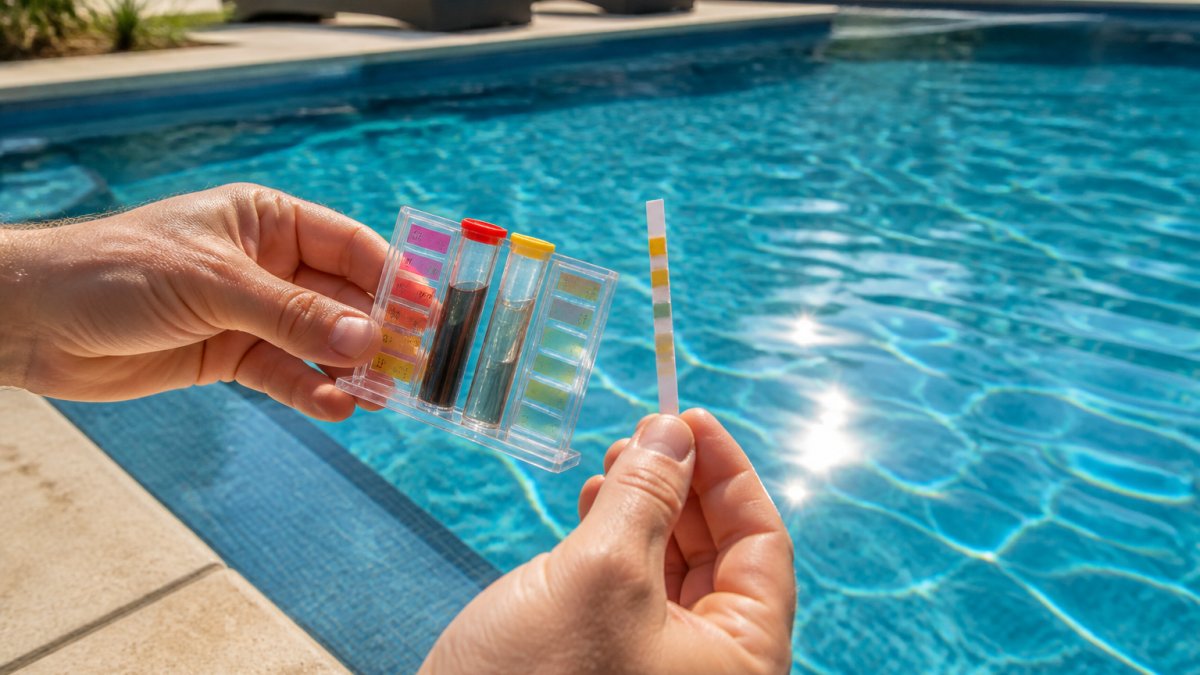
pH measures how acidic or basic your water is; the ideal range is 7.2-7.6. Below 7.2, water becomes corrosive and damages equipment.
Total alkalinity buffers pH. At 80-120 ppm, pH stays stable; too low and pH bounces unpredictably, too high and pH becomes stubborn to adjust.
Test both weekly. Use sodium carbonate to raise pH, sodium bisulfate to lower it, and sodium bicarbonate to raise alkalinity below 80 ppm. Adjustments take 4-6 hours to stabilize, so retest before adding more.
Managing Calcium Hardness and Total Dissolved Solids
Calcium hardness is the concentration of dissolved calcium in your water. The target range is 200-400 ppm. Below 200 ppm, water becomes corrosive and can damage plaster or metal equipment.
In Arizona, tap water often starts with high calcium hardness, and evaporation concentrates it further. If calcium hardness exceeds 500 ppm, you'll need to partially drain and refill, one of the realities of maintaining crystal clear pool water in this climate.
Total dissolved solids (TDS) is the cumulative concentration of all dissolved minerals and chemicals.
Test calcium hardness monthly. Test TDS every 2-3 months. These parameters change slowly but have major long-term effects on water clarity and equipment lifespan.
Sanitization: Free Chlorine and Combined Chlorine
Free chlorine is the chlorine actively available to kill bacteria and algae. Maintain 2-4 ppm for residential pools. This is your primary sanitizer.
Combined chlorine (chloramines) forms when free chlorine reacts with organic matter like sweat, urine, and decomposing debris, and it doesn't sanitize effectively.
Test free and combined chlorine twice weekly. The difference between total chlorine and free chlorine tells you your combined chlorine level. If combined chlorine is high, add shock at the dose recommended for your pool volume.
Pool Filter Maintenance: Keeping Your Filtration System Running
Your filter is the mechanical heart of water clarity. A neglected filter can't remove particles effectively, and cloudiness results regardless of how perfect your chemistry is.
Filter Types and Backwashing
Sand filters trap particles in layers of sand. When pressure increases 8-10 psi above baseline, backwash the filter, reversing water flow to flush trapped debris out a waste line.
Cartridge filters use pleated fabric media and don't require backwashing.
Diatomaceous earth (DE) filters use fossilized algae powder for the finest filtration but require the most maintenance. Backwash when pressure rises 8-10 psi, then add fresh DE powder as directed by your equipment manual.
Cleaning and Replacing Filter Media
Sand filter media lasts 3-5 years before it becomes too compressed to filter effectively. When backwashing no longer restores water flow or pressure remains high despite recent backwashing, replace the sand.
Cartridge filters last 2-3 years depending on usage and water quality. When a cartridge can no longer be cleaned adequately or develops tears, replace it.
DE filters need fresh powder added after each backwash. The powder gradually washes away with each cycle.
How Often to Run a Pool Pump for Optimal Circulation
Pump runtime directly determines circulation effectiveness: underrun it and debris settles instead of reaching the filter; overrun it and you waste energy. The goal is finding the sweet spot for your pool.
Calculating Circulation Hours
Calculate turnover rate by dividing pool volume by pump flow rate (gallons per minute). A typical residential pump moves 40-100 gpm, so a 15,000-gallon pool with a 60 gpm pump needs just over 4 hours for one complete turnover.
For maintaining crystal clear pool water, aim for at least two complete turnovers daily. This means running your pump 8-10 hours minimum during cooler months. In summer, increase to 12-16 hours daily. During extreme heat waves (above 105 degrees), run continuously or nearly continuously.
Energy Efficiency and Summer Heat Considerations
Variable-speed pumps reduce energy consumption by 75% compared to single-speed models. If your pump is more than 5 years old, upgrading to a variable-speed model pays for itself within 2-3 years through reduced electricity costs.
In summer, run your pump during the hottest part of the day (2 PM to 8 PM). This maximizes circulation when algae and bacteria growth accelerate. If you have a timer, set it to run these peak hours at full speed and early morning hours at reduced speed.
Shock Treatment and Algae Prevention
Pool shock is chlorine at concentrated doses designed to overwhelm organic contaminants and restore free chlorine levels rapidly.
Shock your pool weekly during summer months. Add shock in the evening after swimmers have left, then run your pump overnight.
Algae prevention starts with adequate free chlorine and circulation. Maintain free chlorine above 2 ppm at all times.
When green algae appears despite prevention, shock treatment at double the normal dose is required. Yellow or black algae requires even more aggressive treatment and may need professional intervention.
Debris Removal and Brushing: Surface and Deep Cleaning
Surface debris like leaves and insects must be removed daily. They decompose and consume chlorine, creating combined chlorine that reduces sanitizer effectiveness.
Brush pool walls and floor weekly.
Vacuum the pool floor weekly if debris accumulates. Manual vacuuming takes 15-20 minutes.
In Arizona's monsoon season, debris removal becomes urgent. Heavy rain and wind can dump leaves and branches into your pool faster than your skimmer can handle.
Getting Professional Help When You Need It
Maintaining crystal clear pool water is absolutely achievable for homeowners willing to commit to weekly tasks.
At Absolute Blue Pool, we handle the weekly maintenance that keeps water crystal clear year-round.
For homeowners managing their own pools, know when to call for help.
Phillip was the saviour of my pool! He turned a cloudy mess into crystal clear water and has maintained it flawlessly.
According to the EPA's guidance on pool maintenance, proper water circulation and chemical balance are essential to preventing waterborne illness.
Research from the Pool & Hot Tub Alliance's water chemistry standards emphasizes that free chlorine levels between 2-4 ppm provide effective sanitization while minimizing chloramine formation.
The CDC's recreational water illness prevention guidelines stress that regular testing of pH, alkalinity, and chlorine levels prevents the chemical imbalances that lead to both cloudy water and unsafe conditions.
Frequently Asked Questions
What is the most common cause of cloudy pool water?
Cloudy water usually results from poor filtration, imbalanced pH, or insufficient chlorine levels. When your pool pump isn't running long enough or your filter needs cleaning, particles remain suspended in the water. Test your water chemistry first, if pH is above 7.6 or free chlorine is below 1 ppm, adjust those levels immediately. A dirty cartridge filter or clogged sand filter will also cause cloudiness even if chemicals are balanced.
How often should I test pool water to keep it crystal clear?
Test your water at least twice weekly during summer months, and once weekly during cooler seasons. Arizona's extreme heat causes chemical levels to fluctuate rapidly, especially chlorine. Use a reliable water testing kit to check pH, total alkalinity, free chlorine, and calcium hardness. Many pool owners find that consistent testing prevents 80% of water clarity problems before they start.
How often to run a pool pump to maintain clear water?
Run your pool pump 8-12 hours daily during summer, adjusting based on pool size and bather load. A general rule: your pump should complete one full water turnover every 6-8 hours. In extreme heat, running longer helps manage chemical levels and prevents algae. However, longer pump runtime increases energy costs, so consider running during off-peak hours and using a timer to balance clarity with efficiency.
Can a dirty pool filter make the water cloudy?
Yes. A clogged filter cannot trap fine particles, allowing them to recirculate and cloud your water. Sand filters need backwashing when pressure rises 8-10 psi above normal. Cartridge filters should be cleaned every 2-4 weeks or replaced annually. Diatomaceous earth filters require more frequent backwashing. If your water remains cloudy after balancing chemicals, inspect and clean your filter immediately.
What should I do if my pool water turns green?
Green water indicates algae growth. Stop using the pool and begin treatment immediately: brush all surfaces, run your pump 24/7, add pool shock at the dose recommended for your pool volume, and test chlorine levels hourly. Maintain free chlorine at 10-15 ppm until water clears. Use a water clarifier if needed to speed recovery. This process typically takes 24-72 hours depending on algae severity.
How long does it take to clear cloudy pool water?
Clearing time depends on the cause. Minor cloudiness from chemistry imbalance clears in 12-24 hours once corrected and your pump runs continuously. Filter issues may take 24-48 hours after cleaning or backwashing. Algae-related green water requires 48-72 hours of aggressive treatment with shock and 24/7 circulation. Running your pump longer and maintaining proper filtration speeds recovery.
Get started with Absolute Blue Pool and stop worrying about water chemistry. Our team handles testing, balancing, circulation optimization, and filter maintenance so your pool stays crystal clear without the guesswork. Free quote available, reach out today to learn how flat-rate, no-contract service fits your schedule and budget.