Quick Summary
Pool filter maintenance depends on your filter type: cartridge filters need a hose-down every four to six weeks in peak season, while sand and DE filters need backwashing when pressure rises 8 to 10 PSI above the clean baseline. Always compare your pressure gauge reading against a baseline you record after each cleaning.
- Cartridge filters typically need a hose-down every four to six weeks during peak season.
- Sand and DE filters need backwashing when pressure rises about 8 to 10 PSI above clean starting pressure.
- Record your clean baseline pressure after every cleaning so you can judge changes accurately.
- DE filters need fresh DE powder added to the skimmer after each backwash.
- Never open a filter housing until the pump is off and the air-relief valve has released pressure.
Table of Contents
- Cartridge filters
- Reading the Pool Filter Pressure Gauge
- How to Clean a Cartridge Pool Filter
- How to Backwash Sand and DE Pool Filters
- Troubleshooting Pressure and Flow Changes
- A Pool Filter Maintenance Schedule for 2026
- Booking Your Next Filter Check With Absolute Blue Pool
- Frequently Asked Questions
How Often to Clean a Pool Filter by Type
Pool filter maintenance tips for the year 2026 start with one simple question: how often does your filter need attention? The answer depends on which type of filter you have. Cartridge, sand, and DE filters each follow a different cleaning rhythm, and mixing them up is one of the most common mistakes homeowners make.
Cartridge filters
Most cartridge filters need a hose-down every four to six weeks during peak season, and a deep clean once or twice a year. Pools that get heavy use, heavy pollen, or monsoon debris may need attention more often. Checking the cartridge every couple of weeks in summer is a sensible habit.
Sand and DE filters
Sand filters usually need backwashing when the pressure gauge rises about 8 to 10 PSI above the clean starting pressure. DE filters follow the same pressure rule, but they also need the DE powder recharged after each backwash. Many owners backwash sand filters every few weeks in summer and less often in cooler months.
Reading the Pool Filter Pressure Gauge
The pressure gauge is the best free diagnostic tool on your equipment pad, but only if you read it against a baseline instead of a guess. The gauge measures resistance to flow: as media loads with debris, resistance rises and pressure climbs; when something upstream starves the pump or air enters the system, pressure falls. Learning to separate those two directions is what turns a gauge reading into a repair decision.
Establish a clean baseline first
After every cleaning or backwash, run the pump for a few minutes and write down the reading with the filter valve in "Filter" and the pump at its normal speed. That number, not a generic target, is your baseline. The exact clean starting pressure depends on pump size, plumbing, and filter type, so trust your own recorded number. Tape a small log to the pad or note it in a pool app so the baseline survives the season.
Read the direction of the change
- Pressure 8 to 10 PSI above baseline: the filter media is loaded. Clean a cartridge element or backwash sand and DE. This is the standard cleaning trigger and the one cue every filter type shares.
- High pressure with weak return flow: confirm the filter is the cause before you clean again. A partially closed return valve, a clogged impeller, or a collapsed hose can mimic a dirty filter. Open all valves fully and check the pump basket first.
- Low pressure with low flow: the pump is being starved. Inspect the skimmer basket, pump basket, and any inline leaf canister. A blocked suction line or a water level below the skimmer mouth produces the same reading.
- Low pressure with normal or high flow: suspect air. Look for a loose pump lid O-ring, a cracked union, or a suction-side leak. Air bubbles in the pump basket or returns confirm it.
- Pressure drops suddenly mid-cycle: shut the pump down and inspect the housing, clamp, and gauge itself. A cracked tank, a blown O-ring, or a failed gauge can all cause a sudden drop, and a failed gauge will lie to you for the rest of the season.
When the gauge is not the problem
If pressure sits at baseline but the water stays cloudy, the gauge is telling the truth, the issue is elsewhere. Worn cartridge pleats, channeled sand, or torn DE grids pass debris while holding normal pressure. Test the media directly: a cartridge that stays heavy and matted after cleaning, sand that clumps instead of flowing, or DE grids with visible tears all need replacement rather than another cleaning. Water chemistry is the other common culprit; low chlorine or high combined chlorine will cloud a pool even with a perfectly functioning filter.
Watch out: never open a filter housing or loosen a clamp until the pump is off and the air-relief valve has been opened to release pressure.
How to Clean a Cartridge Pool Filter
Cleaning a cartridge filter is one of the easiest tasks in pool care. You need a garden hose, a cartridge cleaner, and about 30 minutes.
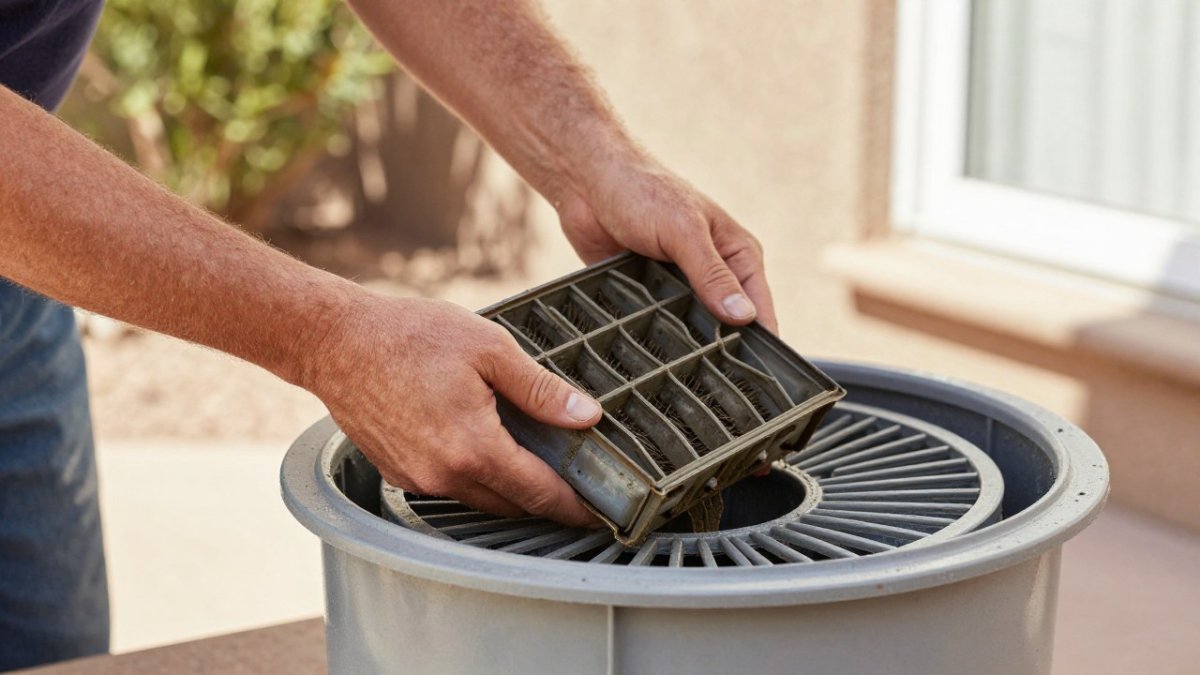
- Turn off the pump and release the pressure from the filter tank.
- Remove the cartridge and rinse it with a garden hose, spraying from the inside out where possible.
- Soak the element in a cartridge cleaner for the time listed on the label, usually several hours.
- Rinse thoroughly, let it dry, and reinstall it with the lid properly seated.
Watch out: a damaged O-ring can let debris back into the pool. Check it every time you open the housing.
How to Backwash Sand and DE Pool Filters
Backwashing flushes dirt out of the filter media and sends it to waste. The steps depend on your valve, so check your manual first.
- Turn off the pump.
- Set the multiport valve to "Backwash."
- Turn the pump on and run it until the sight glass runs clear, usually two to three minutes.
- Turn the pump off, set the valve to "Rinse," and run for about 30 seconds.
- Return the valve to "Filter" and restart the pump.
For DE filters, add fresh DE powder to the skimmer after backwashing. Skipping this step leaves the filter grids exposed and reduces filtration.
Troubleshooting Pressure and Flow Changes
Pressure and flow changes usually point to one of a few causes. Work through them in this order:
- High pressure, low flow: The filter is dirty. Clean or backwash it.
- Low pressure, low flow: Check the pump basket and skimmer basket for blockages.
- Pressure drops suddenly: Look for air leaks at the pump lid or a cracked housing.
- Water stays cloudy after cleaning: The filter media may be worn out or the water chemistry may be off.
If the problem continues after these checks, it is time to call a professional.
A Pool Filter Maintenance Schedule for 2026
Most guides give you intervals in isolation. A calendar that ties weekly, monthly, and seasonal tasks to each filter type is easier to actually follow, and it is the piece competitors leave out. Use the schedule below as a starting point, then shift the intervals based on what your pressure gauge and water clarity tell you.
Weekly tasks (all filter types)
- Empty the skimmer basket and pump basket before debris breaks down into fine particles that load the media faster.
- Note the pressure gauge reading against your clean baseline.
- Skim the surface and check that return flow is strong and even.
- Test free chlorine and pH at minimum; adjust before chemistry problems reach the filter.
Monthly tasks by filter type
| Filter Type | Monthly Task | What to Check |
|---|---|---|
| Cartridge | Inspect and hose down the element | Pleats free of matted debris, no tears, O-ring intact |
| Sand | Backwash when pressure rises 8 to 10 PSI | Sight glass runs clear; no sand returning to the pool |
| DE | Backwash and recharge DE when pressure rises 8 to 10 PSI | Grids intact; correct amount of DE added after each backwash |
Seasonal tasks
Start of swim season. Deep clean cartridge elements with a dedicated cartridge cleaner, inspect sand for clumping or channeling, and check DE grids for tears. Replace any media that no longer cleans up. Confirm the air-relief valve and gauge work before the first heavy-use weekend.
Peak season. Shorten cartridge cleaning to every two to four weeks if the pool sees daily use, heavy pollen, or storm debris. Backwash sand and DE more often as the gauge dictates rather than on a fixed count. Heavy bather load also raises chlorine demand, so test more frequently.
End of swim season. Do a final deep clean, inspect O-rings and clamps, and store cartridge elements dry and upright. For sand and DE, a thorough backwash before closing prevents debris from sitting in the media all winter.
When to replace rather than clean
Cleaning stops being effective at some point, and the signs are specific:
- Cartridge: pleats stay matted or torn after cleaning, or the element no longer seats tightly. Cartridge life depends on use and cleaning technique.
- Sand: the bed clumps, channels, or blows sand back into the pool. Sand media eventually needs replacement, so check its condition regularly.
- DE: grids tear, the manifold cracks, or DE passes into the pool after a recharge. Careful handling extends the life of grid sets.
Efficiency notes for 2026
Cleaning frequency, backwashing volume, and pump run time all affect water and energy use. Backwash only until the sight glass runs clear rather than on a fixed timer, since excess backwashing wastes water and shortens media life. Running the pump longer than needed to clear the pool adds energy cost without improving filtration once turnover is met. A clean filter at baseline pressure is the cheapest efficiency upgrade on the pad.
Watch out: after any backwash, return the multiport valve to "Filter" before restarting the pump, running the pump with the valve between positions can damage the valve and send debris back into the pool.
Booking Your Next Filter Check With Absolute Blue Pool
Filter maintenance is easier when someone handles it on a schedule. Absolute Blue Pool offers weekly service with transparent flat-rate pricing and no lock-in contracts, so you can focus on enjoying the water. Get Your Custom Pool Care Quote for a clear, flat-rate estimate, or check current deals on our Seasonal Specials & Service Bundles page.
Frequently Asked Questions
How often should you clean a pool filter?
Most cartridge filters need a rinse or deep clean every four to six weeks during regular use, and more often during heavy use or after storms. Sand and DE filters are backwashed when the pressure gauge rises about 8 to 10 PSI above its clean starting reading. Check the gauge weekly during the swimming season so you catch buildup before water flow drops. Cleaning on a fixed schedule works, but the gauge is the more reliable signal for your specific pool.
What should the pool filter pressure gauge read?
A clean filter typically shows a starting pressure recorded right after a fresh cleaning or backwash, and that number is your baseline. Once the reading climbs 8 to 10 PSI above that baseline, the filter needs attention. Write the clean starting pressure on the filter or in a logbook so you always know the reference point. Readings that fall suddenly rather than rise can point to a leak or air in the system, which needs a separate check.
Can you run a pool pump while cleaning the filter?
Turn the pump off before opening a filter housing, removing a cartridge, or changing valve positions for backwashing. Running the pump with the lid off or the valve in the wrong position can push debris into the pool or damage the filter. For sand and DE systems, switch to backwash or rinse only with the pump running on the manufacturer's recommended setting, then return to filter mode and check the gauge. Always follow the setup steps in your filter's manual.
How do you know when a pool filter needs cleaning?
Watch for three signs: the pressure gauge is 8 to 10 PSI above its clean reading, water returns look weaker or the pool looks cloudy despite balanced chemistry, or the pump runs with noticeable strain. Visible debris clinging to cartridge pleats also means it is time. If you have checked these and the problem persists, the filter media may be worn, and a service visit can confirm it.
