Last Updated: October 30, 2026
Quick Summary
Professional pool water testing is worth it when home kits cannot explain a recurring problem, such as cloudiness, unstable chlorine, or repeated chemical purchases that do not fix the water. It measures parameters like phosphates, metals, and combined chlorine that most home kits skip. For routine checks, a home kit is usually enough.
- Professional tests measure phosphates, metals, combined chlorine, and total dissolved solids, which many home kits do not check.
- Test free chlorine and pH at least twice a week during warm months, more often in heavy use or extreme heat.
- Collect samples about 18 inches below the surface, away from skimmer and return jets, and note recent treatments.
- Ask for an itemized quote that separates the test fee from recommended chemical purchases.
Table of Contents
- What Professional Pool Water Testing Actually Measures
- Professional Test vs Home Test Kit: Accuracy and Limits
- How Much Professional Pool Water Testing Costs
- How Often Should You Test Pool Water?
- When Professional Testing Is Worth Paying For
- How to Prepare a Sample and Get the Most From a Professional Test
- Booking Your Water Assessment With Absolute Blue Pool
- Frequently Asked Questions
Professional pool water testing costs more than a test strip, but it can catch problems a home kit misses. For most Phoenix-area pool owners, the answer depends on what they are testing for, how often, and whether a trusted baseline already exists. At Absolute Blue Pool, we see the same pattern repeatedly: homeowners test often, but still do not know why their water keeps drifting out of balance. This guide explains what a professional analysis measures, how it compares with a home kit, and when the extra cost is worth it.
What Professional Pool Water Testing Actually Measures
A professional water test goes beyond the handful of readings most home kits provide. The core readings usually match what a home kit checks, including free chlorine, pH, total alkalinity, calcium hardness, and cyanuric acid. The difference lies in the depth of the analysis and the context a technician brings to the results.
Parameters a home kit rarely covers
Many home kits skip parameters that influence water quality in less obvious ways. These can include combined chlorine, total dissolved solids, phosphates, and metals such as copper or iron. Phosphates and metals often explain why water stays cloudy or resists sanitizer even when the basic numbers look acceptable.
Technicians can also interpret how the readings interact. Low alkalinity can make pH swing quickly, and high cyanuric acid can reduce chlorine effectiveness. Reading these numbers together is where a professional analysis adds value.
Professional Test vs Home Test Kit: Accuracy and Limits
Home kits are useful for routine checks. Drop-based kits are generally more precise than test strips, which change color quickly but offer broader ranges. Still, a home kit depends on the user's technique, the age of the reagents, and how carefully the sample is collected.
Professional testing usually uses laboratory-grade methods and reports results against target ranges. That reduces guesswork, especially when a problem is recurring. A home kit can tell you what the chlorine level is today. A professional report can help explain why it keeps dropping overnight.
Neither option is perfect. A professional result is a snapshot taken at one moment, and it still depends on a clean, representative sample. Consistent home testing between visits remains valuable.
How Much Professional Pool Water Testing Costs
Professional pool water testing pricing depends on the test scope, the number of visits, and whether it is bundled with other services. For current pricing, see Absolute Blue Pool's pricing page or request a quote. Always ask for an itemized quote that separates the test fee from any recommended chemical purchases. Our guide on avoiding hidden fees in pool cleaning explains which charges to watch for before you sign.
DIY cost versus professional cost over a season
A home test kit has a lower upfront cost, but the true expense includes reagents, replacement chemicals, and the time spent testing and adjusting every week. Here is a realistic side-by-side for a typical 15,000-gallon pool over a 6-month swim season:
The comparison only favors professional testing when you factor in the cost of getting it wrong. A green-pool recovery can require repeated chemical purchases, plus the time and frustration involved. If your home testing leads to repeated chemical purchases that do not solve the problem, the professional test often pays for itself by preventing wasted chemicals. Track what you spend on test supplies and corrective chemicals for a full season, then compare that total with the professional quote.
Here is how a typical 15,000-gallon pool compares on cost over a six-month season.
| Item | DIY home testing | Professional testing |
|---|---|---|
| Upfront cost | Lower | Higher |
| Ongoing expense | Reagents and replacement chemicals | Test fee plus recommended chemicals |
| Time spent | Weekly testing and adjusting | Scheduled visits only |
| Hidden cost | Repeat chemical purchases if the problem persists | Prevents wasted chemicals |
How Often Should You Test Pool Water?
Most pool owners should test free chlorine and pH at least twice a week during warm months, and more often during heavy use or extreme heat (the CDC). Arizona summers push chlorine demand up, so weekly checks alone often miss shifts that happen between visits.
A professional test is not a weekly task. A reasonable pattern is a baseline analysis when you first hire a service, another after a major problem such as a monsoon storm, and periodic checks when you notice persistent cloudiness, odor, or irritation. Between those, a home kit covers daily and weekly monitoring.
When Professional Testing Is Worth Paying For
Professional testing usually makes sense in specific situations rather than as a default habit. The key is to match the test to a problem you cannot solve with a home kit. Here is when it pays off, and why:
- Recurring cloudiness or algae despite regular chemical adjustments. Cloudy water can come from high phosphates, metals, or poor filtration, parameters most home kits do not measure. A professional test identifies the actual cause so you stop guessing and buying the wrong chemicals.
- Chlorine will not hold a steady level even after correct dosing. This often points to high cyanuric acid (which locks chlorine), high combined chloramines, or an unseen contaminant load. A professional test measures cyanuric acid and combined chlorine accurately, which many strips do poorly.
- You are buying or inheriting a pool with an unknown history. A baseline professional test gives you a documented starting point, including total dissolved solids and metals, so you can plan a realistic maintenance budget.
- A green-to-clean recovery is underway and you need a clear starting point. Before you spend money on shock and algaecide, a professional test tells you whether the water is safe to swim in and what the correct shock dose should be.
- You want an independent check on a service provider's work. If you suspect your pool service is not balancing the water correctly, a third-party test gives you objective numbers to discuss. A full pool inspection service can also check equipment and surfaces for problems that water chemistry alone will not reveal.
It is probably not necessary when the water is clear, the readings are stable, and routine home testing confirms that. Spending on a professional analysis to solve a problem that does not exist adds little value.
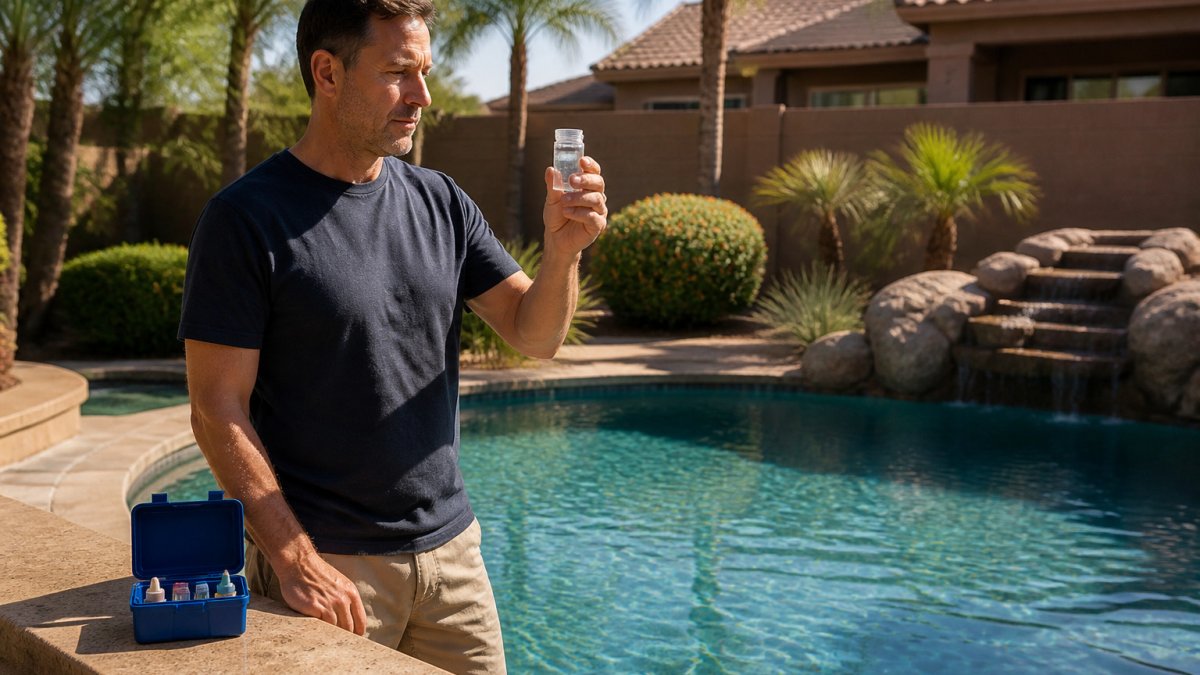
!A homeowner in a backyard in the Phoenix area standing beside a clear pool, holding a water sample bottle near the pool deck in morning light
How to Prepare a Sample and Get the Most From a Professional Test
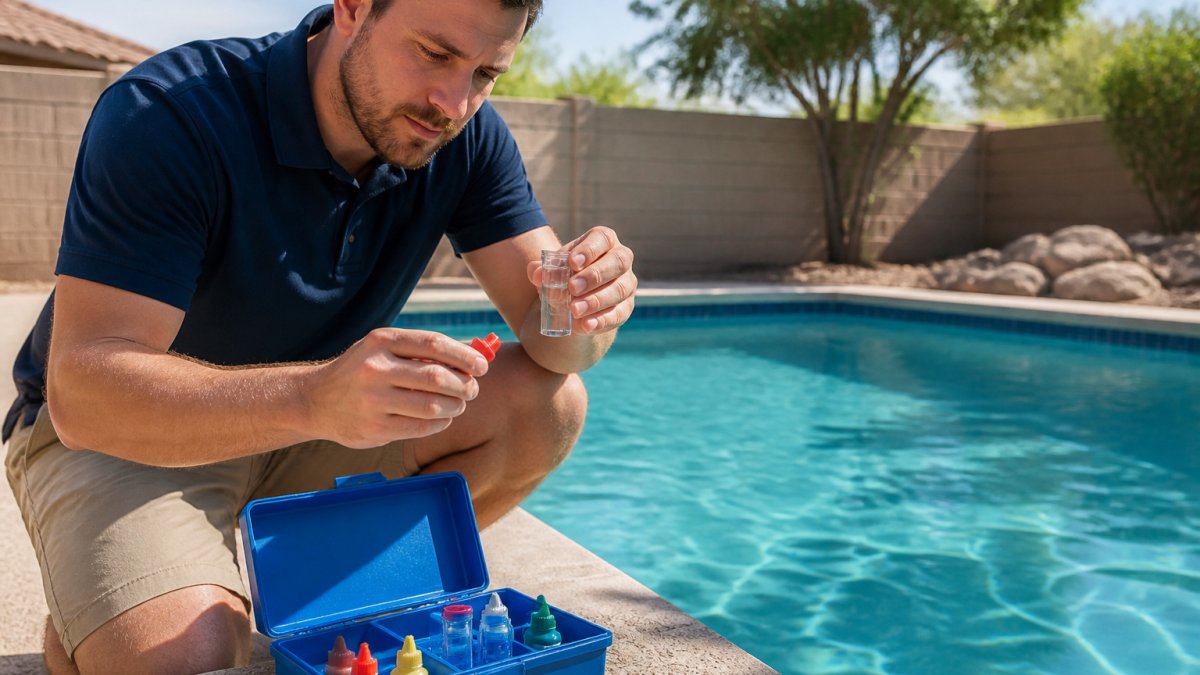
Good sample collection matters more than most owners realize. Collect water from about 18 inches below the surface, away from the skimmer and return jets, in a clean, dry container. Avoid sampling right after adding chemicals, and note the time and recent treatments so the technician has context.
Before the visit, write down any symptoms, recent weather events, and the chemicals you have added. Ask the technician to explain each reading in plain terms and to state which numbers are within target range. Request a written summary you can refer to between services.
Booking Your Water Assessment With Absolute Blue Pool
If you want an assessment tailored to Arizona's climate and your pool's history, contact Absolute Blue Pool to schedule a visit or ask questions. Our team can explain what the test covers and what the results mean for your maintenance plan, with no lock-in contract. For ongoing care, you can request a custom pool care quote that matches your pool's size and needs.
Absolute Blue Pool has been helping Phoenix Metro homeowners since 2004, and we would rather give you clear answers than an unnecessary test. The right choice depends on your pool, your habits, and the problems you are seeing. A professional analysis is worth paying for when it answers a question your home kit cannot.
Frequently Asked Questions
What is the most accurate way to test pool water?
Laboratory or professional testing is generally the most accurate, because it uses calibrated instruments and controlled methods. Home options vary. Drop-based kits generally give more detailed chlorine readings than test strips, but they still depend on careful technique and reading the color correctly. For a reliable baseline, especially before buying chemicals, a professional analysis is the safer choice. Absolute Blue Pool can help you decide which method fits your pool.
Is a professional pool water test more accurate than a home test kit?
In most cases, yes. A professional test measures more parameters, such as total dissolved solids, metals, and phosphates, and reduces the chance of user error in color matching. Home kits remain useful for quick, routine checks of free chlorine and pH between visits. The practical approach is to use a home kit for frequent monitoring and a professional test periodically to confirm the results.
How often should pool water be professionally tested?
Most pool owners benefit from a professional test a few times a year, plus after major events such as a green-to-clean recovery, a heavy monsoon storm, or a switch in sanitizer type. Routine home testing, typically weekly during the hot season, handles day-to-day balance. Pool service visits that include chemistry checks can cover much of this schedule. Ask your provider what they test on each visit.
