Last Updated: November 14, 2026
Quick Summary
Pool care near me means a weekly visit that covers skimming, brushing, basket emptying, and a full chemical check, usually in about 20 minutes. In desert heat, test chlorine and pH two or three times a week in peak summer. Expect flat-rate pricing driven by pool size, debris load, equipment condition, and visit frequency.
- Adjust alkalinity first, then pH, then sanitizer, or the numbers fight each other.
- A filter gauge reading well above its clean baseline usually means a clogged filter.
- Ask whether chemicals, the first visit, and shock treatments are included in a flat rate.
- Above ground pools hold less water, so a small dose goes further and overdose swings numbers fast.
- After a monsoon, skim and vacuum debris before adding any chemical, then shock and re-test.
Table of Contents
- Pool Care Near Me: What a Weekly Routine Actually Looks Like
- Water Testing and Chemical Balance in Extreme Heat
- Pool Care Near Me Prices: What Drives the Monthly Cost
- Private Pool Care Near Me: What Full-Service Visits Cover
- Above Ground Pool Care Near Me: Smaller Pools, Different Rules
- Finding the Best Pool Care Near Me: What to Check Before You Hire
- Monsoon Recovery and Seasonal Prep for a Desert Pool
- Request a Free Quote and Lock In Your Weekly Service Day
- Frequently Asked Questions
Pool Care Near Me: What a Weekly Routine Actually Looks Like
Pool care near me is the search most East Valley homeowners type when the water stops looking the way it should. At Absolute Blue Pool, we handle weekly pool maintenance, and the routine that keeps a desert pool clear is more predictable than most owners expect. A solid weekly visit covers skimming, brushing, basket emptying, and a full chemical check.
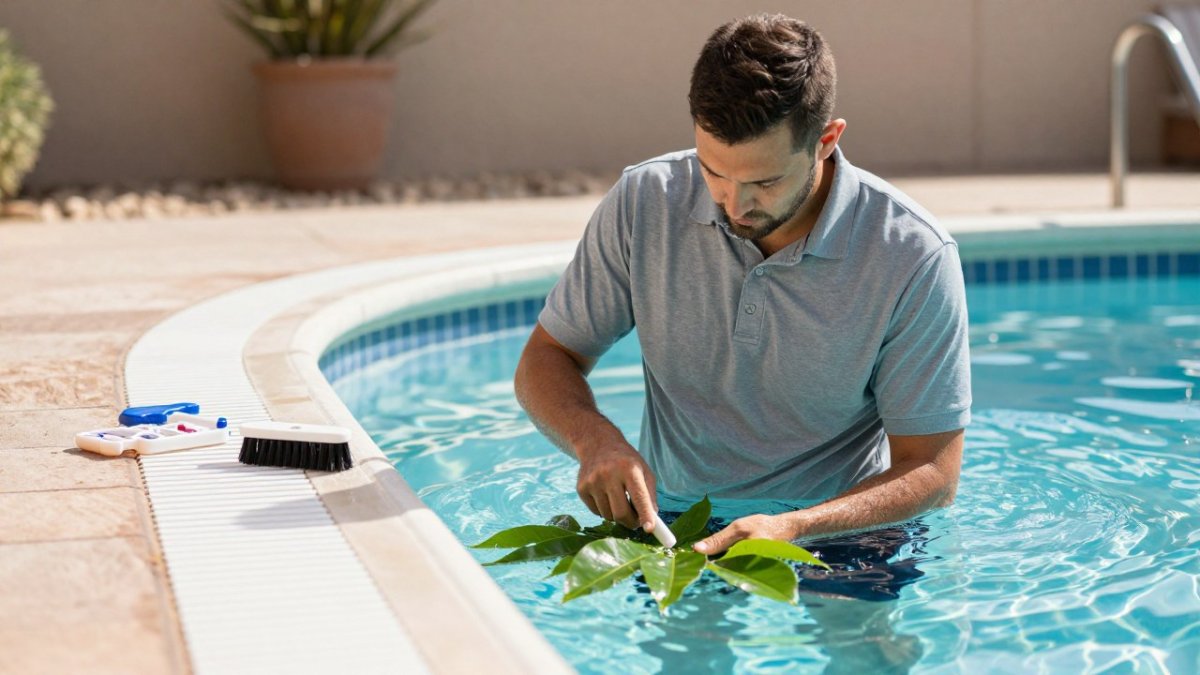
The 20-Minute Weekly Walkthrough
The 20-minute weekly walkthrough is the backbone of any pool care plan. It is the same sequence every week, and that repetition is what catches small problems before they become repairs.
- Skim the surface and empty the skimmer baskets
- Brush the walls, steps, and waterline tile
- Vacuum the floor or confirm the cleaner is running
- Check the pump, filter pressure gauge, and water level
- Test chlorine, pH, and alkalinity, then dose as needed
Watch out: a gauge reading well above its clean baseline usually means a clogged filter, and ignoring it strains the pump. A common mistake is brushing only where the pool looks dirty. Algae hides in the corners and behind the steps.
Water Testing and Chemical Balance in Extreme Heat
Water testing in desert heat is not a once-a-week formality. Summer temperatures burn through chlorine fast, so a pool balanced on Monday can drift by Thursday. Testing chlorine and pH two or three times a week in peak summer keeps the water safe and clear.
The order matters. Adjust alkalinity first, then pH, then sanitizer. Skip that order and the numbers fight each other.
For a deeper walkthrough of target ranges and testing frequency, see our guide on how to balance pool chemicals in Arizona heat. It covers the correct sequence and how often to test when the thermometer climbs.
Pool Care Near Me Prices: What Drives the Monthly Cost
Pool care near me prices depend on a handful of factors, not one flat number. Pool size, debris load, equipment condition, and visit frequency all move the monthly figure. A smaller pool with light leaf fall costs less to service than a large pool under mature trees. Understanding what separates residential weekly plans helps you compare quotes apples to apples.
The Four Cost Drivers
Pool size and volume. Gallons determine how much chemical a visit requires and how long vacuuming and brushing take. A plunge pool and a 20,000-gallon pool are not the same job even if they sit on the same street.
Debris load. A pool under mature trees, near a construction site, or in a windy corridor needs more skimming and more frequent basket emptying.
Equipment condition. A pump that is failing, a filter that is overdue for a media change, or a cleaner that keeps stalling turns a routine visit into a repair call. Providers price in the risk of equipment that is already marginal.
Visit frequency. Weekly service is the standard. Twice-weekly visits cost more but are common in peak summer or for pools with heavy bather load. Some providers offer every-other-week plans, but those usually exclude chemical balancing between visits.
What a Flat Rate Should Cover
A transparent flat rate should state clearly what it covers, including whether chemicals, the first visit, filter cleanings, and green-to-clean recoveries are included or billed separately.
Watch out: the cheapest advertised rate often excludes chemicals or charges extra for the first visit. Ask what the flat rate actually covers before you compare quotes, and ask specifically whether shock treatments and algaecide are included.
Questions to Ask Before You Compare Quotes
- Is the quoted rate per visit or per month, and how many visits does it include?
- Are chemicals included, and is there a cap on chemical usage?
- What happens if the pool turns green between visits?
- Is there a first-visit or startup fee?
- Does the rate change seasonally?
Absolute Blue Pool quotes a transparent flat rate with no lock-in contracts. To see what a plan would run for your pool, get your custom pool care quote and compare it against your current bill. For a realistic breakdown of what a monthly plan includes, read our article on weekly pool service cost per month.
Private Pool Care Near Me: What Full-Service Visits Cover
Private pool care near me means a service built around one backyard, not a route squeezed between commercial accounts. A full-service visit goes beyond water treatment. It includes vacuuming, brushing, skimming, basket emptying, equipment checks, and complete chemical balancing.
That last part matters. A thorough visit confirms the filter, pump, and cleaner are all doing their jobs. If you want to see the full scope before you commit, our page on full-service pool cleaning lists exactly what each visit includes.
Above Ground Pool Care Near Me: Smaller Pools, Different Rules
Above ground pool care near me follows the same chemistry rules with a few twists. These pools hold less water, so a small dose goes further and an overdose swings the numbers fast. Test after every adjustment rather than adding more on instinct.
Circulation is the other difference. Above ground filters often run on shorter cycles, so debris settles faster. Skim daily during monsoon season and keep the water level below the skimmer opening.
Finding the Best Pool Care Near Me: What to Check Before You Hire
The best pool care near me comes down to four checks before you sign anything. Verify the provider is licensed and insured, ask whether chemicals are included in the flat rate, confirm the service day is consistent, and read customer reviews for reliability.
| What to check | Why it matters | Red flag |
|---|---|---|
| Licensing and insurance | Protects you if something breaks | Won't provide proof |
| Chemical costs | Changes your real monthly total | Fees appear after month one |
| Service day consistency | Keeps chemistry stable | Vague scheduling |
| Contract terms | Controls how you can cancel | Long lock-in period |
| Reviews and ratings | Shows follow-through | No recent reviews |
A common mistake is choosing on price alone. Callback reliability separates good providers from cheap ones. Our buyer's guide to finding reliable pool service walks through the questions to ask and the answers that should concern you.
Monsoon Recovery and Seasonal Prep for a Desert Pool
Monsoon recovery and seasonal prep are where desert pool ownership differs from anywhere else. Dust storms can dump debris into the water, and a pool can turn green after a heavy storm. Winterizing looks different here too: pools rarely freeze, so the goal is reduced runtime and lighter chemical dosing rather than a full shutdown. A month-by-month calendar keeps the work predictable instead of reactive.
Month-by-Month Desert Pool Calendar
March through May (spring startup). Test and balance the water after winter's lighter dosing. Clean the filter, inspect the pump basket and O-rings, and confirm the cleaner is running. As temperatures climb, increase chlorine testing to twice a week.
June through September (peak heat and monsoon). Test chlorine and pH two to three times a week. Skim daily during dust storm season. After a storm, skim and vacuum first, then test and shock. Watch out: a pool can turn green after a heavy storm if circulation stops, so confirm the pump is running after any power outage.
October and November (fall transition). Reduce runtime as temperatures drop, but keep filtering. Clear leaves before they sink and decompose. This is the best window for preventive maintenance, because a pump or filter repaired in fall avoids an emergency call in spring.
December through February (winter protection). Keep the pump running on a reduced schedule, test weekly, and watch for freeze warnings that call for overnight runtime. Do not drain the pool; keeping water in it protects the plaster and the shell.
Monsoon Recovery Checklist
- Skim and vacuum debris before adding any chemical.
- Empty skimmer and pump baskets.
- Test chlorine, pH, and alkalinity.
- Shock to break down contaminants, then re-test before swimming.
- Confirm the filter pressure gauge is near its clean baseline.
If a storm leaves the pool green and the filter cannot keep up, a green-to-clean recovery is the right call rather than repeated shock treatments.
Request a Free Quote and Lock In Your Weekly Service Day
Consistent pool care comes down to showing up every week and doing the same thorough walkthrough. That is the whole method, and it works because it never gets skipped.
Absolute Blue Pool has served Phoenix Metro homeowners since 2004 with flat-rate pricing, consistent service days, and no lock-in contracts. Our team specializes in Arizona water chemistry and monsoon green-to-clean recovery, and we provide proactive updates on your pool's health. If you want stress-free pool ownership, get started with Absolute Blue Pool and lock in your weekly service day.
Frequently Asked Questions
How often should a pool service technician visit?
Most pools in a hot, dry climate need weekly service during swim season. That cadence keeps filtration, circulation, and chemical balance from drifting between visits. Pools with heavy debris, small above ground pools that heat up fast, or pools recovering from a green-out may need twice-weekly visits for a few weeks. Ask any provider how they set frequency and whether they adjust it seasonally, since a flat weekly schedule in July may not match what your pool needs in January.
What services are usually included in routine pool care?
A routine visit can include skimming surface debris, brushing, vacuuming, and checking and adjusting water chemistry. Some providers include chemical costs in a flat rate, while others bill chemicals separately. Ask directly which parts and chemicals are covered, and confirm whether filter cleaning or backwashing is part of the plan or an add-on.
Can a pool service help clear a green pool after a monsoon?
Yes. Green-to-clean recovery is a distinct job from routine pool care: it usually involves a heavy shock treatment, repeated brushing, filter cleaning, and sometimes a partial drain and refill if stabilizer levels are too high. Ask about response time before you need it, since storm weeks are when schedules fill fastest and callbacks are slowest.
How much does pool care cost per month?
Pricing depends on pool size, visit frequency, whether chemicals are included, and how much debris your yard drops into the water. Providers that advertise a low base rate often bill chemicals on top, so compare the all-in monthly figure rather than the headline number. Request a written flat-rate quote for your specific pool and confirm what triggers extra charges, such as green-to-clean recovery, filter rebuilds, or equipment repairs.
