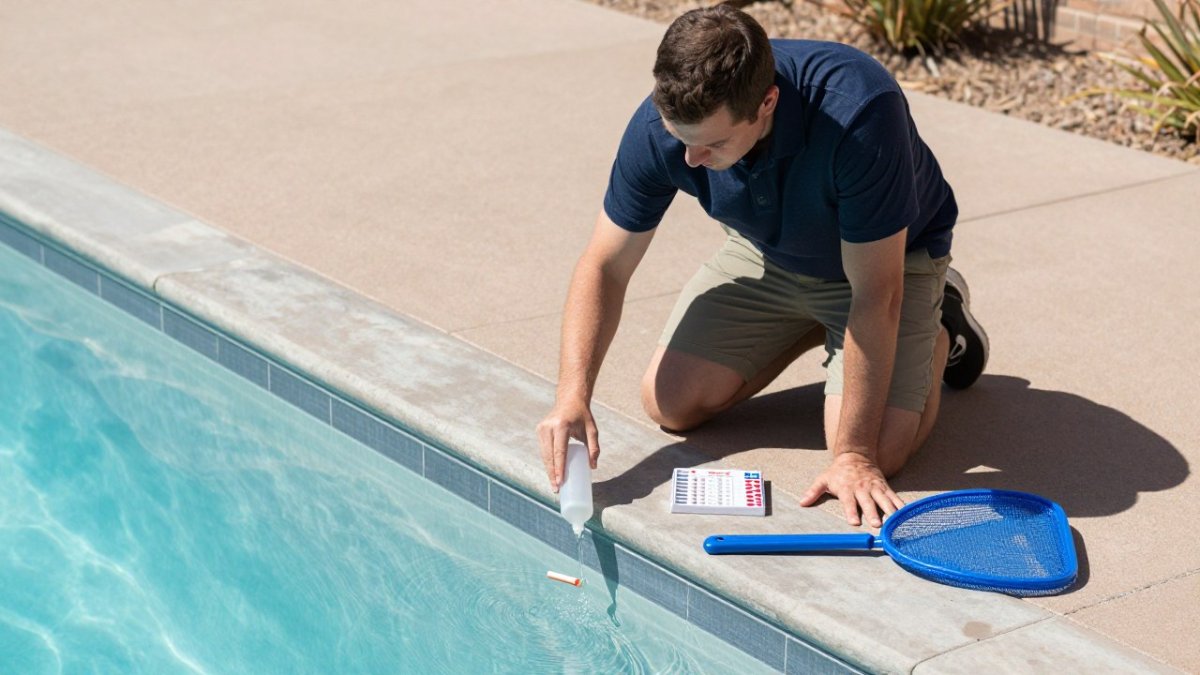
Last Updated: November 8, 2026
Quick Summary
To lower calcium hardness in a Phoenix pool, drain 20 to 30 percent of the water, refill, and retest, repeating until you reach your target range. Reverse osmosis removes calcium directly and works better when hardness is well above range. Baking soda does not lower calcium hardness.
- Test calcium hardness before and after every refill to know where you stand.
- Drain about 20 to 30 percent of the water per cycle, then refill and retest.
- Phoenix fill water is hard, so each refill can add calcium back.
- Reverse osmosis removes calcium rather than diluting it, but produces reject water.
- Keep the pool surface wet during any drain to protect plaster from sun and heat.
Table of Contents
- Why Phoenix Water Pushes Calcium Hardness Up
- What Causes High Calcium Hardness in a Pool
- Signs Your Pool Is Developing Calcium Scaling
- How to Lower Calcium Hardness in Pool Without Draining
- Choosing the Best Calcium Hardness Reducer for Your Pool
- DIY Treatment Versus Professional Service: What It Costs You
- Keeping Calcium Hardness in Range Through Phoenix Summers
- Booking Your Water Chemistry Check With Absolute Blue Pool
- Frequently Asked Questions
Calcium hardness is one of the most common water problems Phoenix pool owners face, and it builds up faster than most people expect. Phoenix water is hard to begin with, so the calcium in every refill adds to the level already in the pool. This guide covers how to lower calcium hardness without losing your whole pool to a drain.
Calcium hardness is the amount of dissolved calcium in your pool water, measured in parts per million (ppm). When it climbs too high, the water starts depositing calcium carbonate on tile, plaster, and equipment. That buildup is called scaling.
Why Phoenix Water Pushes Calcium Hardness Up
Phoenix gets its water from sources with high mineral content, so every fill brings calcium into the pool. Hot, dry air then evaporates the water while the minerals stay behind. Over a long summer, that concentration effect adds up quickly.
Watch out: Do not assume a fresh fill starts you at zero. Test the water before and after every refill so you know where you stand.
What Causes High Calcium Hardness in a Pool
Several things push calcium levels up:
- Hard fill water: Each refill adds more dissolved calcium.
- Evaporation: Water leaves, but minerals stay in the pool.
- Chemical choices: Some calcium-based chlorine products add calcium directly.
- Long stretches without partial drains: Without removing some water, calcium never gets diluted.
A common mistake is treating hardness as a one-time problem. It is an ongoing one in this climate.
Signs Your Pool Is Developing Calcium Scaling
Look for these warning signs:
- A white, chalky film on tile and the waterline
- Rough or cloudy plaster in spots
- Scale on heater elements or in the filter
- Water that looks dull even after balancing other chemicals
Test your water if you see any of these. Scaling often starts before you can see much of it.
How to Lower Calcium Hardness in Pool Without Draining
You can lower calcium without draining the full pool. The two main approaches are a partial drain and refill, or a calcium reducer product. For how to rebalance pH, alkalinity and chlorine in the right order after lowering hardness, see the chemical balancing guide for Arizona heat. Both work best when you test first and follow the product label.
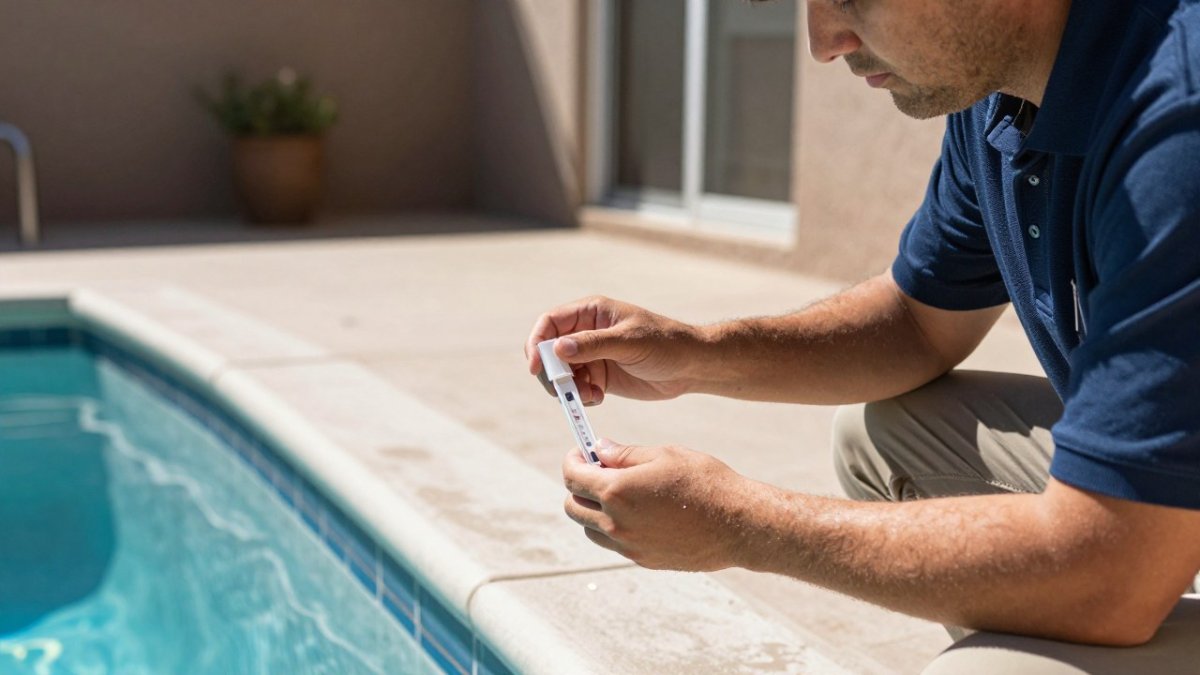
Partial Drain and Refill Method
This is the most reliable method for high hardness. Here is how it works:
- Test your current calcium hardness and write it down.
- Drain about 20 to 30 percent of the water.
- Refill with water and test again.
- Repeat until you reach your target range.
Each cycle dilutes the calcium. Keep the next fill in mind, because Phoenix tap water is hard too.
Will Baking Soda Lower Hardness in Pool?
No. Baking soda raises total alkalinity, not calcium hardness. It will not reduce calcium levels, so skip it for this problem.
Choosing the Best Calcium Hardness Reducer for Your Pool
Calcium reducers are chemical products that bind or remove calcium from pool water. Read the label for dosing based on your pool volume. Always test after adding a reducer and wait for it to circulate before retesting.
DIY Treatment Versus Professional Service: What It Costs You
The useful comparison is the total cost of each path over a full season, including the water you throw away and the surface damage you avoid or cause.
The DIY path: partial drain and refill
A partial drain and refill is often the lowest-cash option, but the real cost is water. To drop calcium hardness by a given percentage, you must replace roughly that percentage of the pool's volume, and because the fill water is already hard, each cycle dilutes less than you expect. A pool that needs to fall from a high level into the 200-400 ppm range may need several cycles rather than one. Check your current water and sewer rate schedule before you assume draining is cheap. To compare what a professional test measures against a home kit, see what professional pool water testing covers.
Every drain-and-refill cycle can expose plaster to direct sun and heat if the pool sits empty too long, so keep the surface wet during any drain.
The professional path: reverse osmosis (RO) filtration
Reverse osmosis removes dissolved calcium from the water rather than diluting it, and RO units discharge a reject stream of concentrated water. Ask any operator for the reject ratio before booking. If you would rather hand off the testing and chemistry entirely, see the chemical-only pool service.
How to decide
Use this framework rather than a single price comparison:
- If your hardness is only modestly high and your fill water is not extreme, a partial drain and refill is usually the lower-cost path, provided you can do it without letting the surface dry out.
- If your hardness is well above the ideal range and your fill water is very hard, draining may not get you where you need to go, each refill adds calcium back. RO is the method that actually lowers the number instead of resetting it.
- If your pool has a plaster or pebble finish that is already showing scale, the cost of delaying treatment (resurfacing) usually dwarfs the cost of either method, so act on the lower-cost option sooner rather than waiting for a perfect price.
Watch out: Do not drain a pool in the middle of a heat wave without a plan to keep the surface wet, the water you save is not worth a resurfacing bill.
Visit our website for current pricing details or to request a free quote.
The two main ways to lower calcium hardness compare as follows.
| Method | Best for | Key difference |
|---|---|---|
| Partial drain and refill | Modestly high hardness | Dilutes calcium; may need several cycles |
| Reverse osmosis (RO) | Well above range, very hard fill water | Removes calcium; produces reject water |
| Keeping surface wet during drain | Any drain-and-refill | Protects plaster from sun and heat damage |
Keeping Calcium Hardness in Range Through Phoenix Summers
Fixing a calcium spike is the easy part. Preventing the next one is where most pool owners lose ground, because hardness is a cumulative number, it only goes up unless you deliberately remove water or calcium. A seasonal schedule built around evaporation and refill patterns does more than any single treatment.
The seasonal calendar
- Spring (before the heat arrives): Test calcium hardness and total dissolved solids. If hardness is already near the top of the ideal range, schedule a partial drain or an RO service now, while the pool can be emptied safely and before evaporation accelerates.
- Early summer: Establish a baseline and log it. Check hardness every two weeks as temperatures climb, because evaporation rate rises with heat and the concentration effect speeds up.
- Peak summer: Test weekly. This is when hardness climbs fastest, and it is also when an empty pool is most vulnerable to surface damage, so if you drain, do it in stages and keep the surface wet.
- Fall: Test again after the first cool snap. Hardness does not fall on its own, so whatever you ended summer with is what you start winter with. Plan a dilution or RO cycle if you are above range.
- Winter: Lower evaporation means slower buildup, but do not skip testing. A single hard refill after a leak repair can undo months of management.
What to log and why
Keep a simple record of date, calcium hardness, total dissolved solids, and any water added. The pattern matters more than any single reading: if hardness rises steadily between tests with no refills, evaporation is driving it; if it jumps after a refill, your fill water is the culprit. That distinction tells you whether to dilute more often or to switch to RO.
Managing the fill water itself
You cannot soften the municipal supply, but you can reduce how much of it you add. Fix leaks promptly, use a pool cover to cut evaporation (which also cuts the refill volume that brings new calcium in), and avoid calcium-based chlorine products where a non-calcium alternative will do the same job. Small reductions in refill volume compound over a season.
Watch out: Do not assume a rainy or cool month resets your hardness, dilution from rain is minor compared with what evaporation concentrates, and the number will keep climbing unless you remove water or calcium.
Our weekly maintenance visits include water testing and chemical balancing, so hardness gets checked on a regular schedule without you having to remember it.
Booking Your Water Chemistry Check With Absolute Blue Pool
If you are not sure where your calcium hardness stands, a water chemistry check is the fastest way to find out. Absolute Blue Pool can help you understand where your water stands and what your pool needs. Common questions about scheduling, pricing and billing are answered on the frequently asked questions page. Get started with a free quote and find out what your pool needs.
Frequently Asked Questions
Is there a way to reduce calcium hardness in pools?
Yes. The two practical options are a partial drain and refill, which dilutes the calcium with fresh water, and a commercial calcium hardness reducer, which chemically binds calcium so it can be filtered out. Partial replacement is the most reliable method in Phoenix because local fill water is hard and adds calcium back with every refill. Reverse osmosis water, where available, dilutes hardness most effectively. Retest the water 24 to 48 hours after each treatment to confirm the level is dropping toward the 200 to 400 ppm range recommended for most plaster pools.
Does baking soda increase calcium hardness in pools?
Baking soda raises total alkalinity, not calcium hardness, so it will not lower calcium hardness and does not directly increase it. Many pool owners confuse the two because both are tested as part of routine water balance. Adjusting alkalinity with baking soda is still useful for pH stability, but it should be done separately from any calcium hardness correction. If your calcium is high, the fix is dilution or a reducer, not baking soda.
What calcium hardness level should a pool have?
Most plaster and marcite pools perform well with calcium hardness between 200 and 400 ppm, while vinyl liner and fiberglass pools can tolerate lower levels, typically 150 to 250 ppm. In Phoenix, the hard source water often pushes levels above the upper limit within a season. Test at least monthly during summer and whenever you add a large volume of fill water. Staying inside the target range protects both the water and the pool surface.
