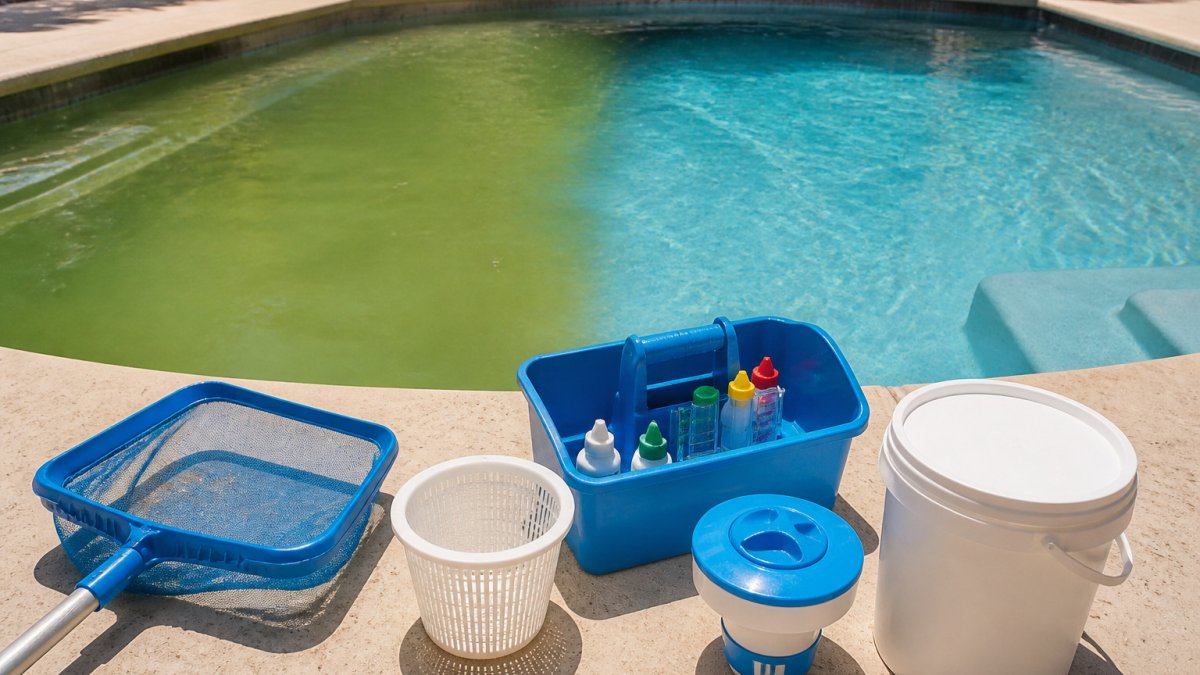
Last Updated: November 1, 2026
Quick Summary
A green-to-clean pool service recovers a green pool through a sequence: diagnosing the water, removing debris, brushing surfaces, balancing chemistry, shocking, running the filter, and retesting until the water is clear. In Phoenix, monsoon storms and heat push pool chemistry out of balance fast, so acting early usually means a shorter, cheaper cleanup.
- Act quickly, because algae multiplies fast and longer waits mean more chlorine and more work.
- Do not swim in green water or water that has just been shocked.
- Remove debris and brush walls, steps, corners and floor before relying on chemicals.
- Test and balance chemistry before shocking, since chemistry determines how well chlorine works.
- Ask for a written quote that itemizes visits, chemicals, filter work and any optional repairs.
Table of Contents
- Why Your Pool Turned Green and Why Speed Matters
- First Steps Before the Service Crew Arrives
- The Green-to-Clean Process, Step by Step
- Pool Water Testing and Chemical Balancing
- How Long to Clear a Green Pool in Phoenix
- What a Green Pool Cleanup Costs and What Affects the Price
- Booking Your Emergency Cleanup and Keeping Your Pool Clear
- Frequently Asked Questions
If your pool turned green overnight, you are not alone. Phoenix monsoon storms and summer heat push pool chemistry out of balance fast, and a green pool can go from annoying to unusable in a few days. Green-to-clean pool recovery is one of the most common emergencies after a monsoon storm, and the same questions come up almost every time: how fast can it be fixed, what will it cost, and what do I do right now?
Why Your Pool Turned Green and Why Speed Matters
Green water is algae. It usually shows up when chlorine drops too low for too long, often after a storm blows in leaves and debris or during a stretch of extreme heat. Once algae takes hold, it multiplies quickly. The longer you wait, the more chlorine it takes to beat back, and the more work the cleanup becomes.
A green pool is also a safety issue, not just a cosmetic one. You cannot see the bottom or the drain, and that makes swimming and pool safety harder to manage. Acting early usually means a shorter, cheaper cleanup.
First Steps Before the Service Crew Arrives
Before a technician arrives, you can help the process along:
- Stop adding unneeded chemicals. Guessing at doses can make the chemistry worse.
- Keep the pump running. Circulation helps distribute treatment, so leave the equipment on unless a technician tells you otherwise.
- Clear surface debris. Pull out large leaves and sticks with a net so the crew can start on the water itself.
- Keep swimmers out. Green water is not safe for swimming, and children and pets should stay away from it.
The Green-to-Clean Process, Step by Step
A green-to-clean recovery is not one treatment, it is a sequence, and the order matters as much as the chemicals. Skipping a step or rushing the sequence is the most common reason a pool turns green again within a week. Here is the sequence most experienced technicians follow, with the reasoning behind each step.
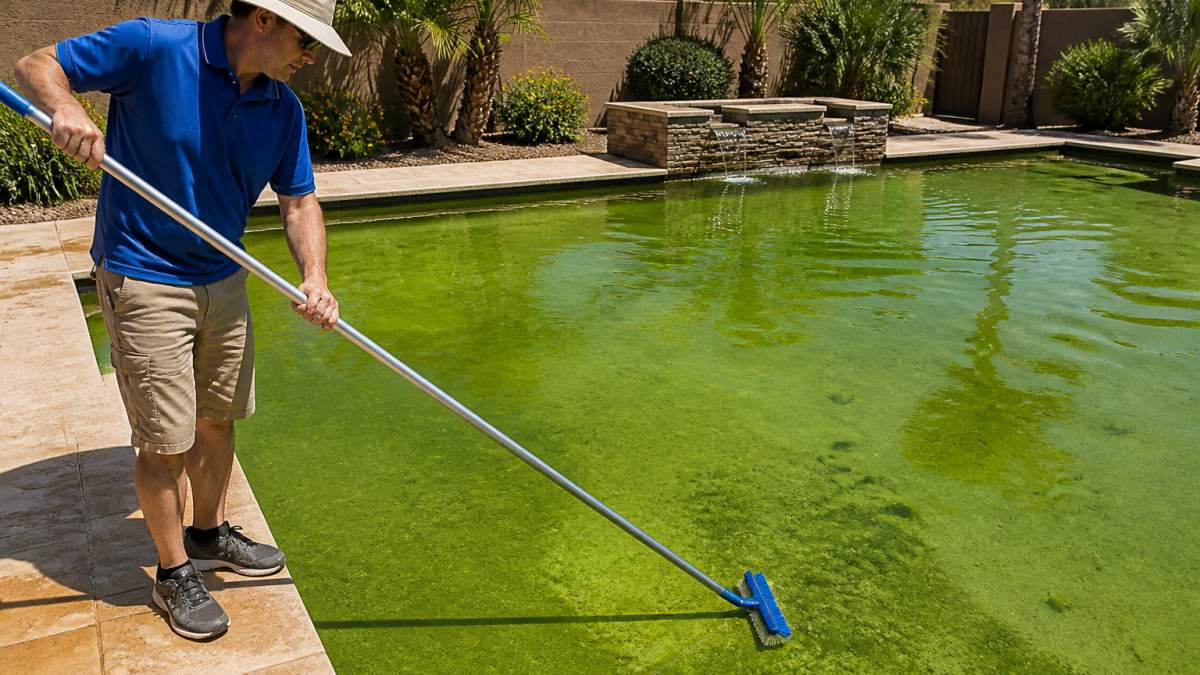
- Diagnose before dosing. Water color, clarity, visible debris, and circulation are assessed before any treatment begins, since each affects the plan.
- Remove debris first. Leaves, sticks, and organic sludge consume chlorine as they break down. Netting and vacuuming debris before shocking means the chlorine goes to the algae instead of the leaves. Heavy debris is bagged and removed, not left in the skimmer.
- Brush every surface. Algae attaches to walls, steps, corners, and the floor, and brushing exposes it to treatment.
- Vacuum debris and algae from the pool. Removing debris and algae helps reduce the load on the filter during recovery.
- Test and balance before shocking. Water chemistry is measured and adjusted before treatment, since chemistry determines how well chlorine works.
- Shock to the correct level. The treatment dose is matched to the pool's condition rather than applied as a single universal amount.
- Run the filter and clean it as needed. The filter plays a key role in recovery, and it is cleaned as needed during treatment.
- Retest and hold chlorine. Chlorine is rechecked during recovery and adjusted until the water clears.
- Final balance and safety check. Once the water is clear, the technician rebalances pH, alkalinity, and stabilizer, confirms the filter is clean, and verifies chlorine has dropped back into the safe swimming range before the pool is reopened.
Removing Debris and Brushing Walls and Floor
Debris removal and brushing do the physical work that chemicals cannot. Algae clings to surfaces, so brushing loosens it and vacuuming pulls it out of the system. Skipping this step is one reason green pools come back after a quick chemical fix. The brushing should cover walls, steps, corners, and the floor.
Filter Cleaning, Circulation and Pump Checks
A dirty filter cannot trap what the pump pushes through it, and that slows recovery. Filter cleaning, a check of circulation, and a look at pump performance all matter. A weak pump or clogged filter can keep the water cloudy even after the chemistry is correct. These checks are a normal part of a thorough cleanup and help protect your equipment.
The recovery follows a fixed sequence, and each step builds on the one before it:
| Step | What to do | Why it matters |
|---|---|---|
| 1. Diagnose | Assess water color, clarity, debris and circulation | Each factor shapes the plan |
| 2. Remove debris | Net and vacuum leaves, sticks and sludge | Debris uses up chlorine |
| 3. Brush | Scrub walls, steps, corners and floor | Loosens algae for treatment |
| 4. Test and balance | Measure and adjust chemistry before shocking | Chemistry sets how well chlorine works |
| 5. Shock | Dose to the pool's actual condition | Matches treatment to need |
| 6. Filter | Run and clean the filter as needed | Traps what the pump pushes through |
| 7. Retest | Recheck chlorine and adjust until clear | Confirms the water is recovering |
| 8. Final check | Rebalance pH, alkalinity and stabilizer | Keeps the pool clear afterward |
Pool Water Testing and Chemical Balancing
Chemistry is the core of any green-to-clean pool service job. Chlorine kills algae, pH affects how well chlorine works, and alkalinity keeps pH stable. In Arizona heat, these levels shift quickly, which is why a single test is rarely enough.
Testing should happen before, during, and after treatment. Adding chemicals in the wrong order or at the wrong strength can leave you with cloudy water, skin irritation, or equipment damage. For the correct order and target ranges, see how to balance pool chemicals in Arizona heat. That is why professional testing and balancing are worth the cost for a severe green pool. If you want to try it yourself, use a reliable test kit and follow the product labels exactly. To compare professional pool water testing against a home kit, see how each one measures and when hiring a pro makes sense.
How Long to Clear a Green Pool in Phoenix
Timing depends on how severe the algae is, how large the pool is, and whether the filter and equipment are in good shape. A lightly green pool can clear in a few days. A heavily green pool with significant debris may take longer, especially when the filter needs cleaning or the pump is underperforming.
Heat matters too. Hot weather can speed up algae growth, so a realistic timeline and an estimate after the initial assessment are worth requesting.
What a Green Pool Cleanup Costs and What Affects the Price
Green-to-clean pricing is not one flat number, and any provider who quotes a single price without seeing the pool is guessing. The final cost is driven by a handful of factors you can assess before you call, which makes it easier to compare quotes fairly.
The main cost drivers:
- Severity of the algae. A light-green pool that just lost chlorine is a shorter job than a dark-green or black-green pool with visible sludge. Severe pools often need multiple shock treatments and several days of filtration.
- Pool size and shape. Gallons drive chemical volume. A large pool with a deep end, spa spillover, or attached water feature takes more chlorine, more brushing time, and more filter cycles than a small rectangular pool.
- Debris load. A pool full of leaves and storm debris takes longer to net and vacuum before treatment can start. Heavy debris is often the difference between a one-visit and a multi-visit job.
- Equipment condition. A clogged filter, weak pump, or failing motor slows recovery and may require a repair or replacement before the water will clear. Equipment issues are usually quoted separately from the cleanup itself.
- Water chemistry starting point. High cyanuric acid (stabilizer) or high calcium hardness can require partial draining and refilling before the pool will hold chlorine. That is a real cost driver that a simple shock-and-run service will not address.
- Access and scheduling. Tight side yards, locked gates, and same-day or weekend requests can affect scheduling and price.
What a transparent quote should itemize:
- The base cleanup charge and how many visits it covers
- Which chemicals are included and which are billed separately
- Filter cleaning and backwash charges
- Debris removal and haul-away
- Any recommended repairs, clearly marked as optional
- Whether a follow-up visit is included if the pool does not clear
Pricing depends on the scope of each pool, so request a free quote through the Absolute Blue Pool website for an estimate based on your pool's size, condition, and equipment.
Booking Your Emergency Cleanup and Keeping Your Pool Clear
When your pool is green and you need it fixed quickly, the next step is simple: request a free quote and schedule a visit. If your pool has turned green, green pool recovery service handles this exact problem. Absolute Blue Pool offers transparent flat-rate pricing without lock-in contracts and consistent service days.
Once the pool is clear, routine maintenance keeps it that way. Weekly service, regular chemical balancing, and filter care help prevent another green-water emergency, especially during the monsoon season.
Frequently Asked Questions
How quickly can a pool service turn a green pool clear?
Most green pools need several days of cleaning, filtering and chemical treatment before they clear. Severely green pools take longer, especially when the filter is clogged or the water has been left untreated for weeks. Ask any company for a written timeline and what it depends on, since a realistic estimate should account for pool size, the level of algae and how quickly the equipment can circulate and filter the water. Expect to need follow-up visits to confirm that chlorine and pH levels hold steady after the initial cleanup.
What should I do first if my pool suddenly turns green?
Stop adding chemicals on your own until you know the water's current readings, and make sure the pump and filter are running so the water keeps circulating. Skim out leaves and large debris, and keep children and pets out of the water while the algae is active. Then call a pool service that can test the water and give you a quote for green-to-clean work. Avoid draining the pool, since that can damage the shell and creates a larger problem than the algae.
What is included in a green pool cleanup cost?
Green pool cleanup pricing usually depends on how severe the algae is, the pool's size, the condition of the filter and pump, and whether the service includes water testing and follow-up visits. Absolute Blue Pool offers transparent flat-rate pricing with no lock-in contracts, and you can request a free quote through the company's website to see current pricing for your pool. Ask any provider to itemize what is included so there are no surprise chemical or equipment charges.
